How Immersion Cooling Works
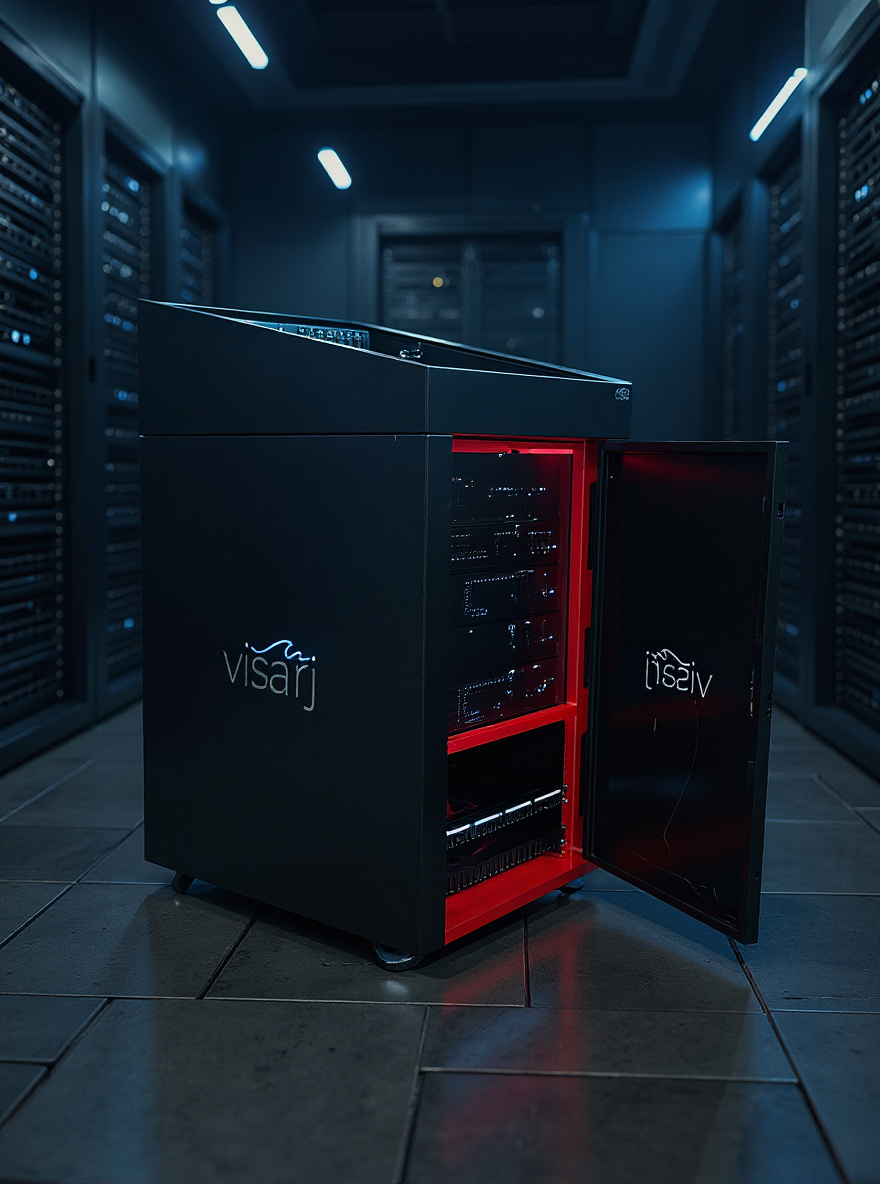
VISARJ Immersion Cooling Pod

Submerged Computing Excellence

VISARJ DCBx pods use advanced dielectric fluid immersion cooling, where servers are fully submerged in a non-conductive liquid that efficiently absorbs and transfers heat.

Direct Heat Transfer:

Liquid cooling is 1,000× more efficient than air, enabling direct contact with heat-generating components.

Passive Cooling:

Natural convection eliminates the need for energy-intensive fans and air conditioning.

Silent Operation:

No fans means near-silent operation and reduced mechanical failure points.

Extended Hardware Life:

Lower operating temperatures and protected components result in longer equipment lifespan.

VISARJ DCBx vs Traditional Air-Cooled Racks

Parameter VISARJ Immersion Pods Traditional Air-Cooled Racks
Power Usage Effectiveness (PUE) 1.05 - 1.16 1.5 - 2.0+
Power Density per Rack Up to 100 kW 5 - 10 kW
Deployment Timeline 8 - 12 weeks 6 - 12 months
Water Consumption Zero High (for cooling towers)
Cooling Energy Savings 40 - 50% Baseline
Space Efficiency 10× higher density Standard
Noise Level Near silent 70-80 dB
Maintenance Requirements Low (no fans, filters) High (HVAC, fans, filters)
Hardware Lifespan Extended (cooler operation) Standard
Environmental Impact Minimal (low energy, no water) Higher (energy & water intensive)

DCBx Pod Configurations

Choose the right configuration for your deployment needs

Edge / Micro DC

12U Pod

Up to 25 kW
Dimensions: 600 × 1200 × 800 mm
Capacity: 12U rack space
Weight: ~800 kg (filled)
Coolant: Dielectric fluid

Ideal For:

  • Edge computing deployments
  • Remote site operations
  • Micro data centers
  • Branch office infrastructure
Deployment: 8 weeks from order
Request Quote
Enterprise / Hyperscale

42U Pod

Up to 100 kW
Dimensions: 600 × 1200 × 2000 mm
Capacity: 42U rack space
Weight: ~2,200 kg (filled)
Coolant: Dielectric fluid

Ideal For:

  • Central data centers
  • AI training workloads
  • HPC applications
  • Hyperscale deployments
Deployment: 12 weeks from order
Request Quote

Resilience Modes

N Configuration

Basic resilience with single power and cooling path

N+1 Configuration

Redundant components for fault tolerance

2N Configuration

Fully redundant systems for mission-critical operations

Standards Supported

Open Compute Project (OCP) specifications
Uptime Institute Tier III/IV ready
ISO 27001 security standards
BIS certifications
IEC 61000 EMC standards
ASHRAE thermal guidelines

Heat Evacuation Options

Flexible thermal management tailored to your facility

Air-Cooled Heat Exchangers

Ideal for installations with outdoor space or rooftop access. Uses ambient air to dissipate heat from the dielectric fluid loop.

  • No water consumption
  • Lower maintenance
  • Works in dry climates

Liquid-to-Liquid Heat Exchangers

Connects to existing facility chilled water systems. Efficient for large deployments with established cooling infrastructure.

  • High efficiency
  • Compact footprint
  • Integrates with existing HVAC

Free Cooling

Leverages outdoor ambient temperatures when conditions permit, further reducing energy consumption.

  • Maximum energy savings
  • Reduced operational costs
  • Environmental benefits

Deployment Scenarios

Edge Deployment

100 kW
Configuration: Single 42U pod
Timeline: 8 weeks
Footprint: 2.5 sq m
Power: 100 kW IT load

Perfect for remote sites, telecom towers, and edge AI processing locations requiring high-density computing in minimal space.

Regional Hub

200 kW
Configuration: Cluster of 4× 24U pods
Timeline: 10-12 weeks
Footprint: 6 sq m
Power: 200 kW IT load

Ideal for regional processing hubs, content delivery networks, and distributed cloud infrastructure with growth flexibility.

1MW Data Center

1 MW
Configuration: 10× 42U pods
Timeline: 12 weeks
Footprint: 25 sq m
Power: 1 MW IT load

Enterprise-grade deployment for AI training, HPC, hyperscale cloud, and high-density computing applications.

Ready to Deploy VISARJ Technology?

Let our experts help you design the perfect DCBx solution for your needs